How to play gin rummy: rules, knocking and scoring
Updated · 4 min read
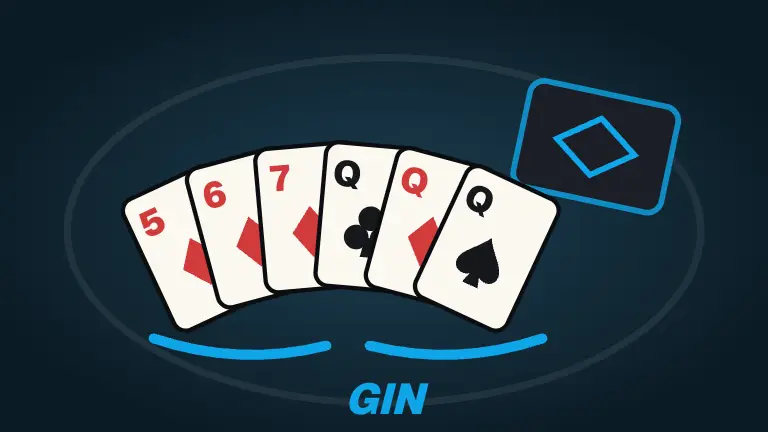
Gin rummy is the great two-player card game: quick hands, constant small decisions, and a score that can turn on a single discard. You draw, you discard, and you try to fit your hand into neat groups before your opponent does. This guide covers the standard rules, the variations people argue about, and how our version plays.
What you need and the goal
- Two players and a standard 52-card deck, no jokers.
- Aces are low. An ace counts 1, number cards count their value, and jacks, queens and kings count 10.
- Paper for the score, since a game runs over several hands.
The aim of each hand is to arrange your cards into melds. A set is three or four cards of the same rank, like three 8s. A run is three or more cards in a row in one suit, like the 4, 5 and 6 of hearts. Ace-2-3 is a run, but queen-king-ace is not. Any card not in a meld is deadwood, and its value counts against you. Over many hands, the goal is to reach the target score first, usually 100.
Setup and the deal
The dealer gives each player ten cards, one at a time. The rest of the deck goes face down as the stock, and the top card is turned face up beside it to start the discard pile. That first upcard is special. The non-dealer may take it or pass; if they pass, the dealer may take it. Whoever takes it then discards. If both pass, the non-dealer begins by drawing from the stock.
How a turn works
On your turn, draw one card: either the top card of the stock or the top card of the discard pile. Then discard one card face up onto the pile. You always end your turn with ten cards. You may not throw back the card you just picked up from the discard pile on that same turn.
Instead of an ordinary discard, you may knock if your deadwood, after you discard, adds up to 10 or less. You lay your hand face up, sorted into melds and deadwood. Your opponent then lays out their own melds and may lay off loose cards onto yours: a fourth card on your set, or cards that extend one of your runs. That lowers their deadwood before the hands are compared.
If you knock with no deadwood at all, you have gone gin. Your opponent may not lay off anything on a gin hand. If the stock runs down to its last two cards and nobody has knocked, the hand is usually a draw and nobody scores.
Scoring
- Knock and win: you score the difference between your deadwood and your opponent's.
- Undercut: if your opponent's deadwood is equal to or less than yours after laying off, they score the difference plus a 25-point bonus.
- Gin: 25 points plus all of your opponent's deadwood.
- Big gin: if all eleven cards after your draw form melds, you may lay down without discarding for 31 points plus their deadwood.
At the end of the game, many players add a box bonus of 25 points for every hand each player won, and a game bonus of 100 to the winner. A player who won no hands at all may be shut out, which some tables double.
Common house rules
- Oklahoma gin: the value of the first upcard sets the knock limit for that hand. A face card means 10, a 3 means 3, and an ace often means you must go gin.
- Target score: 100 is common, but some play to 150 or 250 for a longer match.
- Bonus sizes: gin and undercut bonuses of 20 or 25 are both widespread, and some tables skip big gin.
- Aces high and low: some groups allow queen-king-ace as a run. Most do not.
How gin rummy plays on Knockout
Our Gin Rummy uses the standard rules and scoring above, straight from the game's engine:
- The host picks the target, 100 (the default), 150 or 250, and the knock limit: the standard 10, or Oklahoma, where an ace up means gin only for that hand.
- The undercut and gin bonuses are both 25, big gin is 31, and at the end every hand won adds a 25-point box and the winner adds a 100-point game bonus. There is no shutout doubling.
- Aces are always low. When two cards are left in the stock and the player who drew discards without knocking, the hand is dead and the same dealer deals again; otherwise the deal alternates.
- Your hand is sorted into its best melds automatically, with the deadwood counted for you, and the Knock button shows the card to throw once you can knock.
Beginner tips
- Throw high loose cards early. A lone king costs 10 if you are caught with it.
- Knock early when you can. The longer a hand goes on, the better your opponent's chance of an undercut.
- Watch the discard pile both ways. What your opponent picks up shows what they collect, and what they throw shows what they do not need.
- Keep cards with more ways to grow. A 6 and 7 of the same suit can become a run from either end, which beats a pair whose other two cards are already gone.
Where to play gin rummy free
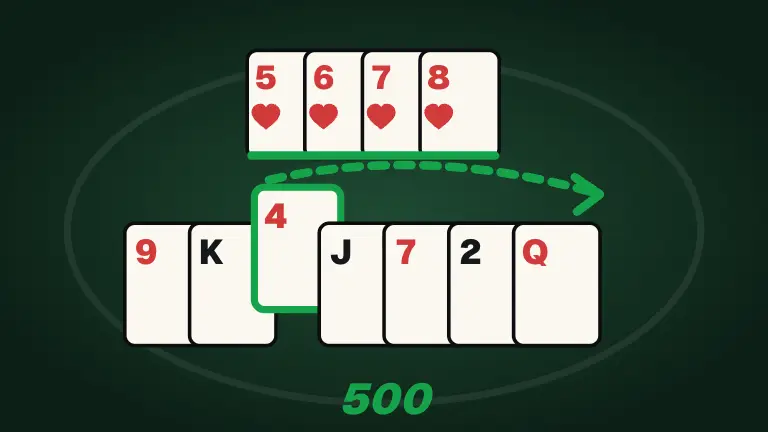
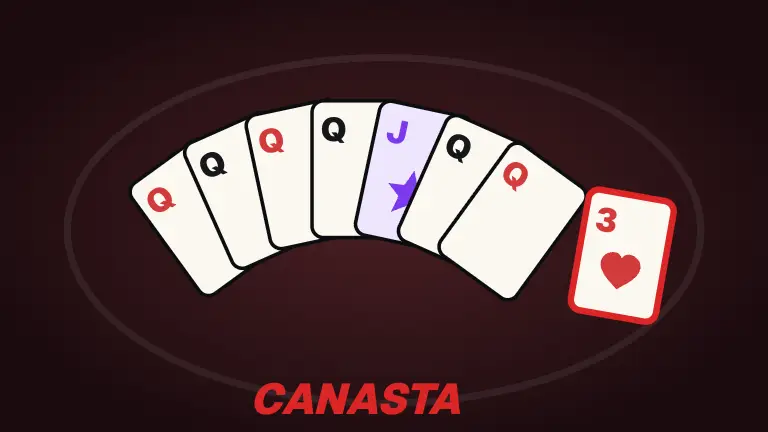
You can play Gin Rummy free in a browser here. Against the computer there is nothing to sign up for: open it and play at Easy, Normal or Hard. Easy throws loose cards almost at random, Normal remembers the discard pile, and Hard also watches what you pick up so it can avoid feeding your melds. To play a friend, make a free player (a username and a PIN or password), create a game and send them the invite link or code.
If you enjoy gin, Rummy 500 takes the same melds to a bigger table and Canasta adds partners. The other great two-player classic is cribbage, explained in How to play cribbage: rules, pegging and counting. More ideas for two are in The best 2-player games to play online.